Agro Conference Logo
  • Home
  • About
    • Conference Chair
    • Conference Speaker
    • Scientific Committee
    • Dates of Importance
    • Partners
    • Conference Program
    • Venue
    • Awards
    • Refund Policy
  • Call of Papers
    • Call for Papers
    • Submit Your Abstract
    • Abstract Submission Guidelines
    • Presentation Guidelines
  • Registrations
    • Registration Fee and Packages
    • Payment Details
  • Publications
    • Supporting Journals
    • Full Paper Guidelines
  • History
    • History 2026
  • Blogs
  • Contact Us
Agro Conference Logo

AgroFood 2027

The AgroFood 2027 aims to bring together leading academic scientists, researchers and research scholars to exchange and share their experiences and research results on all aspects of Agriculture, Food Security and Safety

Quick Links

  • •Home
  • •Call of paper
  • •Date of Importance
  • •Submit Your Abstract
  • •Package and Registration
  • •Contact Us

Upcoming Conferences

  • ICHECS 2027Online Conference26 – 27 January 2027
  • ICOC 2027Online Conference29 – 30 January 2027
  • ICSDG 2027Colombo, Sri Lanka06 - 07 April 2027

Subscribe Us :

No 178/13/
B/6 Kelanimulla Angoda
Sri Lanka .

WhatsApp: +94 77 626 18 47Tel: +94 77 626 18 47

© By iConferences Pvt Ltd (2027) . All rights reserved.

Agro Conference Logo
History 2026History 2026

Agriculture, Food Security, and Food Safety (Agrofood 2026)

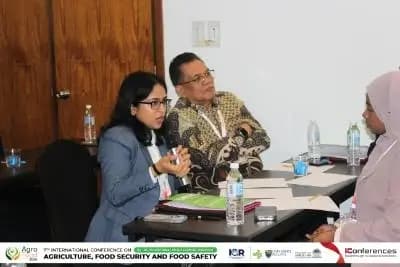
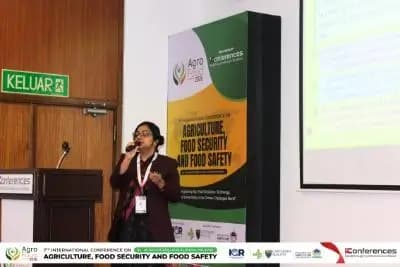
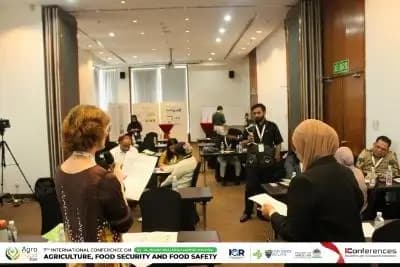
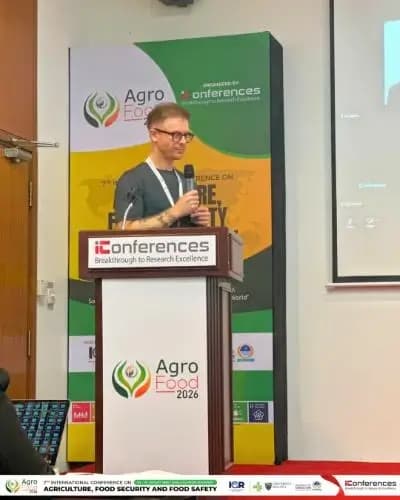
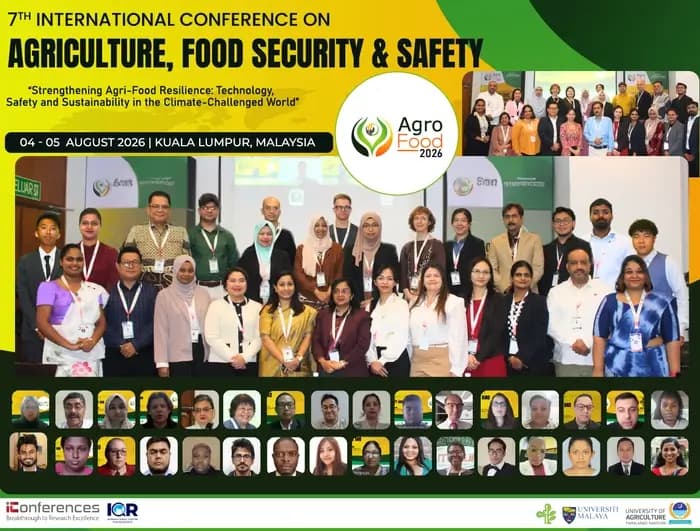
The 7th International Conference on Agriculture, Food Security, and Food Safety (Agrofood 2026) was held on August 4th–5th, 2026, in Kuala Lumpur, Malaysia, in a hybrid format, bringing together researchers, academics, practitioners, industry professionals, and policymakers from across the globe.

Held under the theme “Strengthening Agri-Food Resilience: Technology, Safety and Sustainability in the Climate-Challenged World,” the conference provided an international platform for exploring the interconnected challenges of climate change, agricultural productivity, food safety, food security, technological transformation, and sustainable development.

The two-day event featured keynote addresses, technical sessions, research presentations, and knowledge-sharing discussions, providing participants with opportunities to present emerging research, exchange expertise, and explore innovative solutions for strengthening resilient and sustainable agri-food systems.

Agrofood 2026 was supported by academic and international partners including the University of Agriculture Faisalabad, Pakistan; Centre for Research in Biotechnology for Agriculture (CEBAR), Universiti Malaya, Malaysia; and International Centre for Research, USA.

The scientific programme covered a diverse range of contemporary topics, including agricultural biotechnology, crop improvement, climate resilience, sustainability, One Health, artificial intelligence, digital agriculture, agricultural analytics, food processing, crop health, food security, agricultural economics, value chains, climate-smart farming, functional foods, and product innovation.

The conference successfully demonstrated the importance of interdisciplinary and international collaboration in addressing the complex challenges facing global agriculture and food systems. By connecting technological innovation with food safety, environmental sustainability, economic development, and community resilience, Agrofood 2026 reinforced the need for integrated approaches to building a more secure and sustainable food future.

Agrofood 2026 conference award recipients

Abstract Books 2026

Download the Abstract book

Download Abstract book

Conference Program 2026

Download the conference Program

Conference Proceeding 2026

View Conference Proceeding

Check Conference Proceeding

Speakers of Agrofood 2026

Conference Chair Person
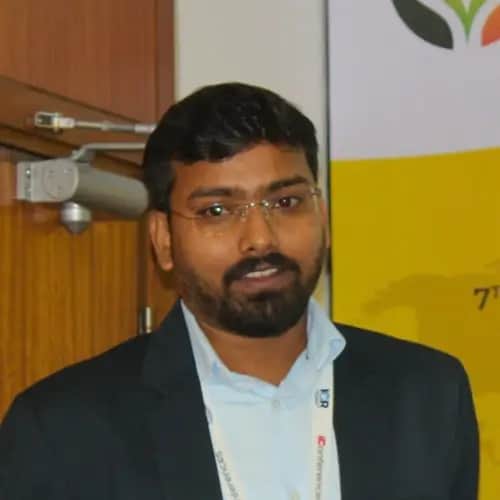
Dr. Nor Khaizura Mahmud, Keynote Speaker - Agrofood 2026

Dr. Nor Khaizura Mahmud

Institute of Tropical Agriculture and Food Security, Universiti Putra Malaysia, Malaysia
Keynote Speaker
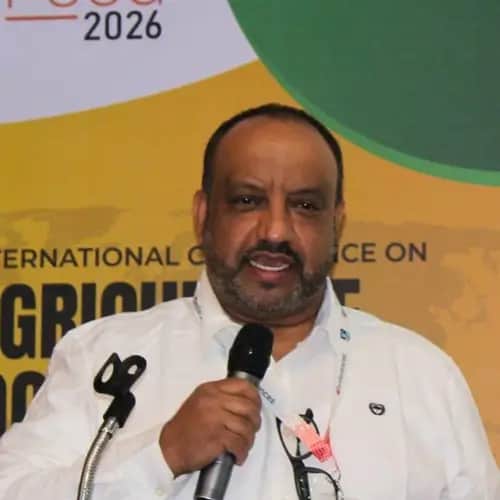
Prof. Dr. Fatiha Hakimi, Keynote Speaker - Agrofood 2026

“Measuring What Matters: Sustainability and Resilience Indicators for Climate-Smart Agriculture”

Prof. Dr. Fatiha Hakimi

Hassan II Institute of Agronomy and Veterinary Medicine, Rabat, Morocco
Keynote Speaker
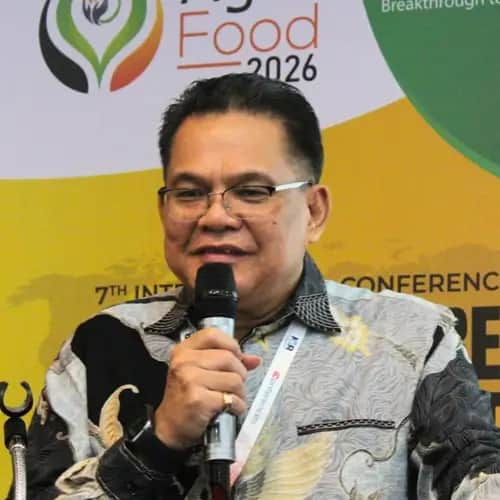
Prof. Jennifer Ann Harikrishna, Keynote Speaker - Agrofood 2026

“Going Bananas! How biotechnology can support food security for the world’s most consumed fruit”

Prof. Jennifer Ann Harikrishna

Director, Centre for Research in Biotechnology for Agriculture (CEBAR), Malaysia
Keynote Speaker
Assoc. Prof. Dr. Rosazlin Abdullah, Keynote Speaker - Agrofood 2026

“The Foundation for Plant Resilience and Sustainable Agri-Food Systems”

Assoc. Prof. Dr. Rosazlin Abdullah

Associate Professor, University of Malaya, Malaysia
Keynote Speaker
Christopher Teh Boon Sung, PhD, Keynote Speaker - Agrofood 2026

“Weather Generator for Crop Modeling”

Christopher Teh Boon Sung, PhD

Department of Land Management, Faculty of Agriculture, University Putra Malaysia, Serdang, Selangor, Malaysia
Keynote Speaker
Dr. Amna Sahar, Keynote Speaker - Agrofood 2026

“Food Waste Reduction through Valorization of Halal Meat Industry By-Products”

Dr. Amna Sahar

University of Agriculture, Faisalabad, Pakistan

Agricultural Biotechnology, Crop Improvement and Climate Resilience

Technical Sessions 1

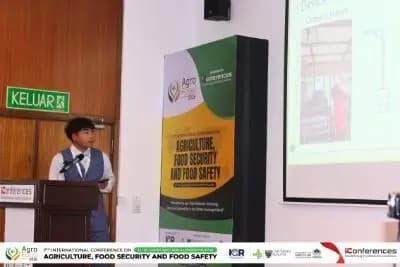
The first technical session explored advances in agricultural biotechnology, crop improvement, plant stress management, and climate resilience. Presentations examined the development of soil-derived bacterial exopolysaccharides as potential native hydro-matrices for sustainable agriculture, transcriptomic responses of Musa acuminata to drought stress, and the potential of oil palm wood vinegar as a foliar biostimulant for improving drought tolerance. Further studies investigated potassium and zinc applications for enhancing hybrid maize productivity, as well as the green synthesis and agricultural applications of silver and zinc oxide nanoparticles. Together, these studies highlighted the potential of biotechnology, nanotechnology, molecular approaches, and sustainable crop-management strategies to improve agricultural productivity and strengthen crop resilience under changing climatic conditions.

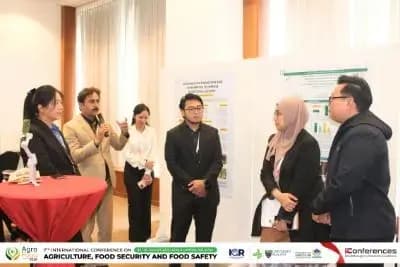
Session photo

Sustainability, One Health and Agricultural Systems

Technical Sessions 2

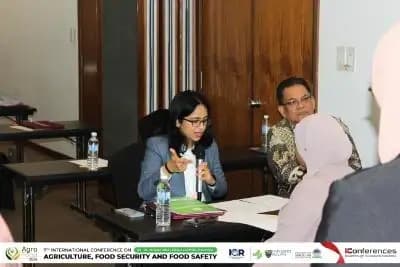
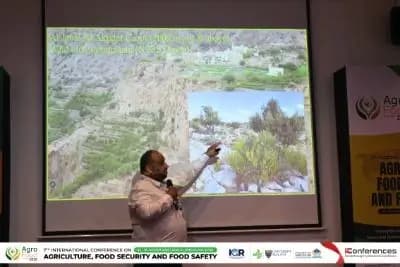
The second session focused on sustainable agricultural systems and the One Health approach, emphasizing the interconnected relationships between agricultural production, environmental sustainability, animal health, and food safety. Presentations explored innovation and value addition in the olive sector in Oman, methodological challenges in agricultural sustainability assessment during the low-carbon transition, and food-powder processing technologies. The session also examined antimicrobial resistance at the poultry-environment interface, highlighting the importance of monitoring and managing risks across intensive agricultural production systems.Research on strengthening organic rice certification systems further demonstrated the role of institutional economics, governance, and value-chain upgrading in supporting sustainable agricultural systems.

Session photo

Artificial Intelligence, Digital Agriculture and Agricultural Analytics

Technical Sessions 3

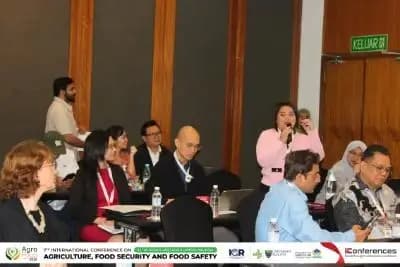
The third session highlighted the growing role of artificial intelligence, digital technologies, imaging systems, and advanced analytics in transforming modern agriculture. Presentations examined hyperspectral imaging and AI for precision quality mapping of mangoes, expert-grounded question-and-answer datasets for precision agriculture advisories in low-resource settings, and an AI-based thermal imaging system for real-time piglet monitoring and early hypothermia warning. Other contributions investigated agricultural information adoption, cybersecurity and system integration in floriculture, and rice-production efficiency using Window DEA and fractional regression models. Collectively, these studies demonstrated how digital technologies and data-driven analytics can support agricultural decision-making, resource efficiency, productivity, and competitiveness.

Session photo

Food Processing, Product Development and Crop Health

Technical Sessions 4

The fourth session brought together research in food processing, product development, fermentation, post-harvest quality, and crop health. Presentations investigated the diversity and pathogenicity of Colletotrichum species associated with apple anthracnose in tropical highland orchards, as well as the effects of fermentation conditions on the physicochemical and microbiological properties of probiotic-fermented tomato juice. Further research examined the use of heat-moisture-treated cowpea flour in bread production and the application of guar-gum coatings to improve the pre-storage quality of ber fruit cultivars. The studies demonstrated the importance of innovative processing, crop protection, and post-harvest technologies in improving food quality, safety, shelf life, and value.

Session photo

Food Security, Food Systems and Community Resilience

Technical Sessions 5

The fifth session addressed some of the most pressing global challenges related to food security, nutrition, sustainable food systems, and community resilience. Presentations examined groundwater quality for sustainable agriculture in Kalpitiya, Sri Lanka, post-harvest tomato losses and coping strategies among value-chain actors in Nigeria, and innovative concepts for climate-independent and self-sufficient food production. The session also explored strategies for strengthening agri-food resilience against the double burden of food insecurity and malnutrition in South Africa, alongside the impact of government food subsidy programmes on food security among remote First Nations communities in Northern Canada. Together, these contributions emphasized the importance of resilient food systems, sustainable resource management, appropriate policy interventions, and community-based approaches to improving food security.

Session photo

Agricultural Economics, Value Chains and Sustainable Development

Technical Sessions 6

The sixth session examined the economic, institutional, and value-chain dimensions of agricultural sustainability and rural development. Research contributions explored genotypic variation in rainfed rice under delayed transplanting, agricultural land conversion in Indonesia, and the structure and performance of smallholder broiler farming value chains in South Africa. Other studies focused on factors influencing the adoption of climate-smart practices among smallholder farmers and examined how buyer power and regulatory design influence the distribution of value within global agri-food chains. These studies highlighted the importance of inclusive value chains, effective governance, climate-smart adoption, and equitable market structures for sustainable agricultural development.

Session photo

Digital Agriculture, AI and Climate-Smart Farming

Technical Sessions 7

The seventh session continued the focus on digital transformation, artificial intelligence, and climate-smart agriculture, particularly in relation to smallholder farming communities.Presentations examined the impact of digital technologies on smallholder farmers' welfare, AI-based pulse price prediction using Random Forest, ARIMA, and LSTM models, and the use of digital tools and crop residues to improve agricultural practices and climate-change adaptation.Research also explored the contribution of digital platforms to crop-insurance accessibility among smallholder farmers in South Africa. Collectively, the studies demonstrated how digital technologies can improve access to information, strengthen agricultural risk management, enhance market opportunities, and support farmers in adapting to climate variability.

Session photo

Food Technology, Functional Foods and Product Innovation

Technical Sessions 8

The eighth session focused on food technology, functional foods, product formulation, and sustainable food innovation. Presentations explored the development and challenges surrounding organic labelling in Australia, microencapsulated vegetable-oil powder-based cookies, and the formulation and functional characterization of a plant-based spread incorporating banana peel, watermelon, and oleaster seeds. The session also featured research on a circular food-system approach through the development of a nutrient-enriched black wheat–whey instant idli mix. These studies demonstrated how food technology and product innovation can contribute to improved nutrition, resource utilization, waste reduction, and more sustainable food systems.

Session photo

Sustainable Agriculture and Food Systems

Poster Presentations

The conference programme was further enriched by additional presentations addressing nutritional security, crop production, agronomic practices, and seed quality. Contributions included research on reconnecting food production and consumption to improve nutritional security, the performance of Asparagus officinalis varieties under shade and open-field conditions in Sarawak, optimization of flowering induction practices for Sarawak Gold pineapple, and purification of Adan Sederhana seeds to support quality Bario rice production in Sarawak. These studies highlighted the importance of locally adapted agricultural practices, crop diversification, quality seed systems, and stronger connections between agricultural production, nutrition, and food consumption.

Session photo

Award Ceremony

Best Student Paper Award - Agrofood 2026
Mr.Roshan Kumar Rawat, Best Student Paper Award - Agrofood 2026

“Estimating The Technical Efficiency of Agricultural Information Adopter Farmers of Maize Crop in India”

Mr.Roshan Kumar Rawat

Indian Institute of Technology (Indian School of Mines),
India
Best Delegate Paper Award - Agrofood 2026
Dr. Nahla O.Eltai, Best Delegate Paper Award - Agrofood 2026

“AMR At the Poultry Environment Interface: Evidence of Undetected Transmission in a One Health Commercial Intensive Broiler Farm”

Dr. Nahla O.Eltai

Qatar University,
Qatar
Session Best Presentation Award – Technical Session 1
Dr. Lau Su EE, Session Best Presentation Award - agrofood 2026

“Transcriptomic Responses of Musa Acuminata Cv. Berangan to Drought: Unveiling the Role of the Mamyb-86-Like Transcription Factor”

Dr. Lau Su EE

Universiti Malaya,
Malaysia
Session Best Presentation Award – Technical Session 2
Dr. Lau Su EE, Session Best Presentation Award - agrofood 2026

“Olive: Innovation In Value Addition and Expansion in Oman”

Prof. Rashid Al-Yahyai

Sultan Qaboos University,
Oman
Session Best Presentation Award – Technical Session 3
Mr. Roshan Kumar Rawat, Session Best Presentation Award - agrofood 2026

“Estimating The Technical Efficiency of Agricultural Information Adopter Farmers of Maize Crop in India”

Mr. Roshan Kumar Rawat

Indian Institute of Technology (Indian School of Mines),
India
Session Best Presentation Award – Technical Session 4
Pokatong, W.D.R , Session Best Presentation Award - agrofood 2026

“Partial Substitution of Wheat Flour with Heat-Moisture-Treatment Modified Cowpea Flour Affected Physicochemical and Sensory Properties of Straight-Dough Prepared Pan Bread”

Pokatong, W.D.R

Food Technology Department,
Universitas Pelita Har, Indonesia
Session Best Presentation Award – Technical Session 5
Dr. Anita Vaillancourt , Session Best Presentation Award - agrofood 2026

“Exploring The Impact of a Government Food Subsidy Program on Food Security Within Remote First Nation Communities in Northern Canada”

Dr. Anita Vaillancourt

Lakehead University,
Canada
Session Best Presentation Award – Technical Session 6
Mr. MLT Mark J Lumsdon Taylor, Session Best Presentation Award - agrofood 2026

“Who Captures the Price? Buyer Power, Regulatory Design, and the Structural Redistribution of Value in Global Agri‑Food Chains”

Mr. MLT Mark J Lumsdon Taylor

United Kingdom
Session Best Presentation Award – Technical Session 7
Assoc. Prof. Subas P Dhakal,</br>Session Best Presentation Award - agrofood 2026

“The Quest for Organic Labelling in Australia”

Assoc. Prof. Subas P Dhakal

University Of New England, Australia
Session Best Presentation Award – Poster
MS. Fillicia Anak William, Session Best Presentation Award - agrofood 2026

“Optimising Flowering Induction for Sarawak Gold (Sg1) Pineapple Agronomic Practices”

MS. Fillicia Anak William

Department of Agriculture Sarawak,
Malaysia

Agrofood 2026 brought together diverse perspectives from academia, research institutions, agricultural communities, food scientists, technology specialists, and development practitioners. The breadth of research presented demonstrated that strengthening food security and food safety requires collaboration across disciplines and geographical boundaries.

From biotechnology and climate-resilient crops to artificial intelligence and digital agriculture, from food processing and functional foods to agricultural economics and community resilience, the conference showcased innovative approaches to some of the most urgent challenges facing the global agri-food sector.

The successful hybrid edition of Agrofood 2026 further expanded opportunities for international participation, enabling researchers and professionals to connect, exchange knowledge, and establish new avenues for collaboration.

The 7th International Conference on Agriculture, Food Security, and Food Safety (Agrofood 2026) successfully continued the conference's tradition of fostering collaboration, advancing innovation, and facilitating knowledge exchange, reaffirming a shared commitment to strengthening agri-food resilience through technology, safety, and sustainability in a climate-challenged world.

We look forward to meeting them in AgroFood 2027 in Bali, Indonesia.